Loops, interlacings and openings
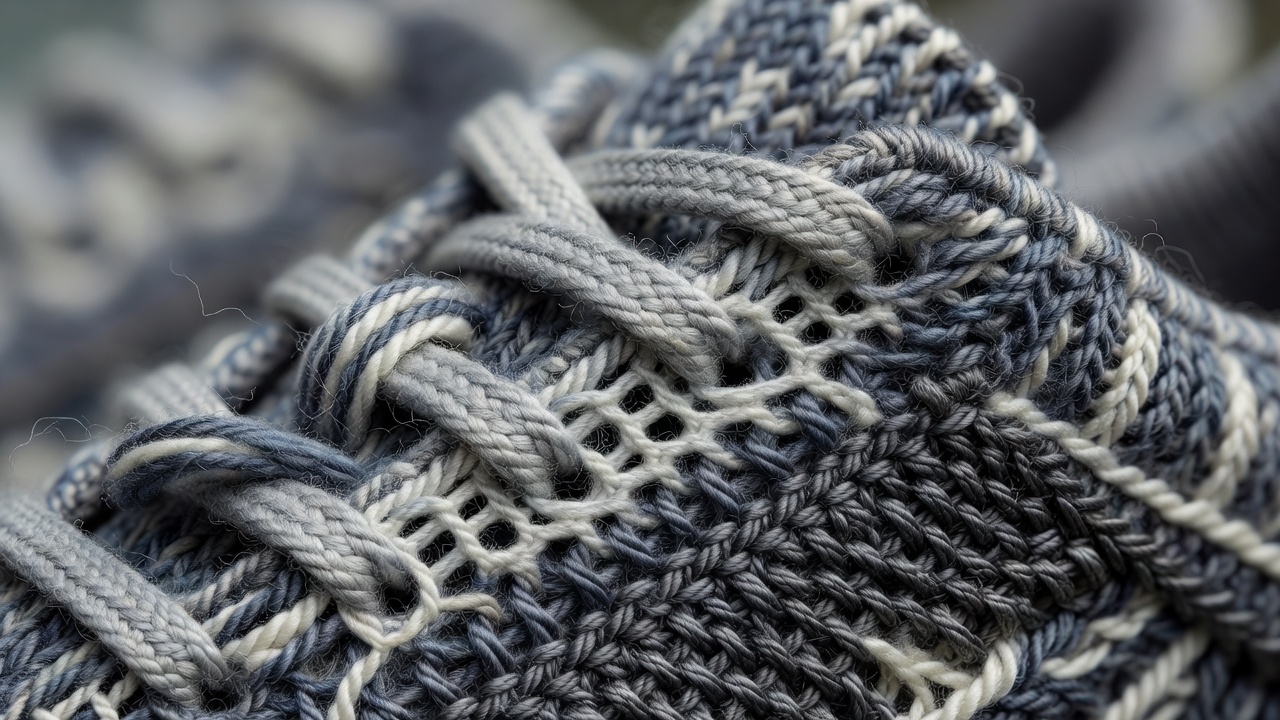
Knitted textiles are formed from intermeshing loops. Woven textiles are formed by interlacing yarn systems, typically described as warp and weft. Those structures influence how fabric stretches, drapes and carries tension, although yarn selection and finishing can change the result considerably. A woven upper can be flexible, and a knitted upper can be relatively restrained.
Mesh describes an open structure rather than one unique material or manufacturing process. It may be knitted or woven and can use different fibers. This matters when comparing shoes: “mesh versus knit” is not always a clean division between two mutually exclusive categories. Ask how open the fabric is, what backs it and which areas are reinforced.
One upper can contain several zones
Nike Flyknit and adidas Primeknit are well-known branded approaches to knitted footwear uppers. Their value as examples is structural: yarn placement and stitch design can vary across a component. A toe area may be designed differently from the midfoot or collar. That does not mean every model using either name has the same fit, yarn content or amount of stretch.
Knitting can also reduce some cutting waste compared with cutting equivalent shapes from flat sheet material, depending on the process and design. That is a narrower claim than saying the whole shoe is environmentally preferable. Yarn production, finishing, rejects, durability and end-of-life handling remain part of the broader picture.
The upper is more than its visible textile
Look near the lace eyelets. Reinforced bands or films help distribute force into the upper instead of concentrating it in a small patch of fabric. Side overlays can limit excessive stretch, while an internal lining may provide a smoother contact surface. A heel counter adds shape and local support, but its stiffness and height vary between designs.
The tongue and collar also affect how pressure feels. A gusseted tongue is connected along part of its sides and can help control tongue movement or contribute to containment. A thick padded collar may feel comfortable at first but still fit poorly around a particular heel. Padding is not a substitute for a compatible shape.
Illustrated cutaway / Not to scale
Breathability is not just visible holes
An airy-looking fabric may sit over a dense backing. Coatings and overlays can reduce airflow, while socks and moisture conditions affect the experience at the foot. Air permeability, water-vapor transfer and protection against liquid water are related practical concerns, but they are not the same measurement. “Breathable” without a method or context leaves room for misunderstanding.
GORE-TEX footwear illustrates this distinction. The technology is intended to combine waterproof protection with water-vapor transfer in specified product constructions. It should not be interpreted as free airflow through an open mesh. Waterproof footwear may be useful in wet conditions, but water can still enter over the collar, and drying behavior depends on the entire shoe.
The fabric you can see is only part of the upper you can feel.
Fit is a structure under load
Try the shoe with the socks you expect to use and lace it without excessive tension. Your toes should not be forced against the front or squeezed together by the sides. Check whether the heel remains reasonably settled when walking, and whether tightening the laces creates a pressure line instead of improving overall hold. Test both feet because their shapes may differ.
A stretchy upper can accommodate some variation, but it should not be used to justify an obviously unsuitable size. Nor should “break-in” be treated as a promise that painful pressure will disappear. Some components soften with use; structural dimensions do not reliably change in the way a wearer might hope. Persistent pain deserves a different fit assessment and, where appropriate, professional advice.
Read fiber claims at component level
Recycled polyester describes an input material, not the complete shoe's environmental outcome. Check whether a percentage applies to the upper, a particular yarn or the entire product by mass. Textile Exchange's Global Recycled Standard and Recycled Claim Standard address recycled content and chain-of-custody requirements, with additional requirements under the former. Certification should be checked against its stated scope.
Care can preserve the useful life of an upper. Remove abrasive dirt gently, allow the shoe to dry away from strong heat and follow the manufacturer's cleaning instructions. Inspect worn linings and torn eyelet areas as well as the outside. A clean-looking knit does not tell you whether the hidden support layers are still doing their job.
Sources and textile boundaries
- Nike company reporting — Flyknit construction and development descriptions.
- adidas corporate reporting — Primeknit technology background.
- GORE-TEX footwear — manufacturer-described waterproof and breathable product systems.
- Textile Exchange standards — Global Recycled Standard and Recycled Claim Standard scope.
Brand descriptions identify construction ideas, not equivalent fit or independently measured airflow. Always check the exact model and the precise scope of a certification claim.